
Why Our House and Land Prices Are Rising — and What It Means If You’re Planning to Buy

Why Our House and Land Prices Are Rising — and What It Means If You’re Planning to Buy “The market” gets blamed for increases in price, and the people just wait around until “the market” turns back down. This never works. Shortages of land, delays in development, and an unwilling Reserve Bank to cut interest rates are all causing prices to increase quicker than many buyers expect, and nothing is turning back soon. If you are deciding between house and land prices in Australia at the moment, here’s the bottom line: Prices are going up because there is not enough supply to meet the demand, and buyers who know why prices are going up will come out better off. Here’s the truth of it. What Is Actually Driving the House-and-Land Values Up Now? Let’s begin with interest rates, just as everyone else does. Market expectations have actually firmed significantly beyond a simple possibility, with a hike to 4.60% now priced in as a near certainty. ASX RBA Rate Tracker place the probability of a 25-basis-point increase to 4.60% at over 80% to 93%. If you are planning on cheaper financing to bail you out, then you are gambling on something that even the Reserve Bank hasn’t decided on yet. Next up comes supply. By mid-September, market pricing had indeed moved toward a hike; most trackers had it in the high-70s to high-80s per cent range for a move to 4.60% at the September 29 meeting (helped along by a hot US jobs report and a Fed hike mid-month). But the “priced into the market” framing understates how split the actual forecasters are: NAB has been out front calling September as its base case, while ANZ and CBA have stuck with November, and Westpac’s position has moved around depending on which week’s note you read; it was the lone holdout for a while before some sources had it flip to September too. Get Expert Help Choosing Your Next Property Let’s Talk Now! Are Land Prices Rising Faster Than Building Costs? Mostly yes, in growth corridors, and that is precisely the part buyers often misread. The cost of titled land in established estates is the tightest bottleneck in the supply chain at present, with developers staging their projects much more conservatively than the demand requires. ABS figures show the average value of approval for a new home is over $517,000, up around 5% from the previous year. So, building costs are rising, but scarcity of land is generally the bigger factor in growth corridors outside the metro area. That is where most buyers get their priorities completely reversed. Instead of thinking about the total cost of buying the land they will build on, they tend to focus purely on the cost per square meter of the build and neglect the land part, which is precisely where the premium will be after the estate has matured. If you wish to have an honest conversation about growth corridors that still have some value left, the best time would be before the deposit is locked in. Should You Wait Until the Market Prices Have Cooled Down to Buy? Not waiting is not a plan, but a gamble, and not necessarily a good one when demand exceeds supply. The majority of people who “wait for things to cool down” end up buying two years from now at a higher price, and with even more leverage, than before. Here’s what normally occurs during your wait: The release of land in the subsequent phase is more expensive, as supply has failed to catch up. Interest rates stay high for longer than advertised, subtly eating away at any savings. Building costs continue to pile up each month, directly affecting the bottom line of construction costs. Your ability to borrow shrinks as income growth lags behind price growth What Does This Mean for Property Investors in Australia? For property investors in Australia, increased land and build costs mean a different equation. The game isn’t about playing with the lowest deposits possible or the most attractive rent yield prediction, but about looking for areas with restricted supply due to actual population growth rather than a prediction in a slide deck. Those who have structured their finances with some leeway, and not stretched their budget to the limit of what the bank is willing to lend, are the ones who remain standing after this rate cycle. Good structure wins out over good hopes of a rate cut, which has yet to happen. How Should You Make Your Buying Decision in This Market? Think twice before you put pen to paper and get the numbers straight before you make any commitments: Compare the price of the land to the last three real settled sales, not indicative listing prices, in the estate. Always allow yourself a buffer of at least 10% for changes in building costs. Arrange your financing ahead of time with a rate rise test, not current rates. Stay away from contracts that have uncertain site cost conditions. Make sure of the builder’s track record in completing houses after the day of settlement. Need Help Finding the Right Residential property? Get Your Free Consultation Why Is Property Management Important After Settlement in Australia? It’s only part of the story, as after the property settles, it’s property management in Australia that will decide if the profits on paper become real. The length of vacancy, the type of tenants, and lack of maintenance cut into profits far quicker than expected. Even when a property has been purchased wisely, mismanagement will reduce its performance, sometimes seriously. Manage the investment with the same consideration that was taken into the purchasing of it, for it’s the management that makes the difference. Prices Are Not Going To Wait For You Don’t use rising prices as a reason not to invest. It is a sign of a disrupted supply chain, and inaction comes at a price. Those investors who act on discipline and not emotions and FOMO
You Don’t Need $1 Million to Start: A Guide to Entry-Level Property Investment

You Don’t Need $1 Million to Start: A Guide to Entry-Level Property Investment Somewhere down the line, the idea emerged that property investment is something reserved for the wealthy; you have to have either $750,000, a trust fund, or an unexpected windfall of money in order to “qualify” for property investment. This couldn’t be further from the truth and has kept many competent individuals from entering the market unnecessarily. The point isn’t the size of your savings account but having a realistic deposit, good borrowing options, and a plan that’s not based on luck. Anyone running a reputable property investment company in Australia will confirm this after all the marketing hype is stripped away. Why Is The “One Million Dollar Rule” Here To Stay? Because it’s easy, and stories are easier to spread than facts. News media focus on luxury properties in the eastern suburbs of Sydney or the inner ring suburbs of Melbourne, because that makes news. That doesn’t make news is the investor who purchases a modest three-bedroom property in a growth region for less than a fraction of that cost and lets time, rent, and debt management take care of the rest. That’s the contrarian part most people don’t like to say out loud: sometimes it’s better to start with something small than with something big. Because when someone stretches himself for their first purchase, there’s nothing left for his second, third, or fourth investment. And discipline always trumps size; after all, it’s not about the size of the asset one owns from the get-go, but about owning something at all. Get Expert Help Choosing Your Next Property Let’s Talk Now! How Much Does It Really Cost to Buy Your First Investment Property? Put away the myth about a million-dollar deposit. Here is what really dictates whether you can buy your first investment property this year: A deposit of about 10-20% of the purchase price, although some lenders may require less depending on the state and government scheme. Stamp duty, which varies between states, but may be partially or fully exempt for certain eligible borrowers. Lenders Mortgage Insurance (LMI), which you will have to pay if your deposit falls below 20%, although this may be rolled up in your loan amount. The capacity to service your loan, calculated by a lender based on your ability to make payments given the interest rates and your debts and earnings. Cash reserve for contingencies. How Much Deposit Do You Really Need? On a $500,000 starting home, 10% comes to $50,000, which is not $1 million, nor even close. Factor in stamp duty and borrowing fees, and the real cost that a lot of first-time investors need to get into a place will be around $60,000-$80,000, depending on the state and property types. The cost is still not a small amount, and pretending it is not does not change that reality at all. This is precisely when a property investment advisor will prove their value, as opposed to the magic trick they do not have, by crunching the numbers based on what would happen if interest rates go up, there is vacancy, and what you can borrow. What Locations Should Beginners Focus On, and What Ones Should They Avoid? The choice of location becomes particularly important when you enter real estate investments, since you can’t afford to make mistakes. Some guidelines that might come in handy: Select locations that offer a diversified workforce, rather than places that depend on just one company or mine as their source of livelihood. Select locations that offer existing commitments towards infrastructure development (transportation, hospitals, schools), rather than promises only. Focus on real estate that suits tenants’ needs (houses close to schools, units close to public transportation, not just “lifestyle” property). Stay away from locations which suffer from oversupply and lack of rent growth due to competition from the existing stock. Make sure to research vacancy rates and yield in a particular suburb and not in the entire city. This type of analysis is easily done and easily misunderstood. If you wish to know what your borrowing capabilities are before you even begin viewing properties, make an appointment to receive a free strategy session to learn about the real numbers. Is It Really Safer to Go for a Cheaper Property? Sometimes not, especially when beginner-friendly tips become destructive. There is no direct relation between cost and safety in real estate deals. An investment at $350,000 in a town that is experiencing depopulation and has only one company could be more dangerous than an investment at $550,000 in a city where people are willing to rent apartments and there are diverse industries. The price is just one of many factors. The thing that will ensure a newcomer’s safety is the ability to choose the property that will generate income based on fundamentals, such as land value, demand from tenants, and the growth drivers, rather than on the price. How Can You Sidestep the Entry-Level Rookie Errors? While many entry-level investors fail due to the fact that they picked the wrong suburb to invest in, most make the mistake of believing that buying a piece of real estate is the result and not the beginning of their investment journey. Property investing favors individuals who look ahead to the next five or ten years, not the next open house. This includes implementing proper property management right from the start, handling cash flow correctly, and creating a real property management portfolio, as opposed to an isolated purchase that you hope works out. A properly managed property that you review each year allows you to buy your second property easily. Need Help Finding the Right Residential property? Get Your Free Consultation Small Deposit, Large Discipline: Your Actual Starting Point $1 million is not important, but a sensible budget, a profitable property, and the discipline to follow the plan even in a noisy market environment are. That is all there is to the game; no magic, not perfect timing, but rather
Investing Under $750K: What’s Actually Available in Today’s Market
Investing Under $750K: What’s Actually Available in Today’s Market Everyone believes that this budget cannot afford anything worthwhile nowadays. It doesn’t mean anything like this; it just means that things have changed since five years ago. This budget allows you to afford something that is completely different from what was available five years ago. Now, this budget gives you the possibility of buying matured properties in outer growth corridors, an almost new package of land and house, and also good units in the middle ring, located with professional property management in Melbourne after settlement. There will be no chance of getting inner-Melbourne properties, and that is what leads people to overspend. Why Has This Budget Become the New Entry Point for Investors? In five years, $750,000 will be comfortably within the middle ring suburbs of Melbourne. Today, it sits right at the point where outer growth meets affordable middle ring suburbs. Based on Core Logic’s projections midway through 2026, the median price of houses in Melbourne will range anywhere from $850,000 to $920,000. In addition to all of this, the policies of Victoria itself support this figure. With a stamp duty rebate up to the level of $750,000 and a First Home Owner Grant of $10,000 on new properties below this price level, the government of Victoria has effectively established this limit, and the market works on the basis of this price level. Get Expert Help Choosing Your Next Property Let’s Talk Now! What Does the Market Have To Offer for This Amount of Money in Melbourne? Forget the CBD and inner east; discussions begin at a minimum of $1.5 million. In this price range, these are some of your options: A solid three-bedroom or four-bedroom house in outer areas like Melton, Wyndham Vale, and Werribee, where median prices are still in the range of $500,000 to $700,000. A new house-and-land package in growth areas like Rockbank, Kalkallo, or Clyde North, typically with building incentives thrown into the package. A townhouse or unit in middle-ring suburbs like Reservoir, Preston, or Sunshine, where land value does all the heavy lifting. Dual occupancy or granny flat site in selected outer suburbs, great for investors who require two rental yields from one site. Property investors in Melbourne who stick to the above list have historically performed better than those who try and reach for a suburb that they currently cannot afford. Is a House-and-Land Package Better than an Established Home at this Price? There is no right answer because they address different concerns. A house-and-land package gives you a depreciation benefit, reduced cost of maintenance for the first decade, and certainty of the cost of construction. A middle-ring suburb with established housing means that you own the land now, have the rental history on which to base your expected return, and eliminate construction risks. Your losses are the depreciation deductions and sometimes higher maintenance costs for the first few years. Things You Should Verify Before Committing Yourself to This Budget There’s no room for any unforeseen error when numbers are this tight. Before you put down your signature: The suburb’s five-year rental yield trend, rather than just the current one-quarter. Whether the advertised price covers outdoor work, fencing, and driveways, or if they come as “extras” after. Council development plans, because new development may increase or decrease your value based purely on the timing. Your holding cost estimates, which include land tax, insurance, and body corporate fees. If the serviceability buffer on your lender is still good in case the RBA pulls another move, the current cash rate is 4.35%, unchanged from August, with the next review on September 29. Why Is The Quality Of Your Manager More Important Here on This Budget? Here, the margins are smaller, and the quality of ongoing management will impact whether the investment works according to the model. If the management is not up to scratch, the property could end up sitting empty for weeks, being under-rented by an apathetic agent, or picking up maintenance problems over the years to come, which gradually eat away at any gain you made. It’s here where discipline takes priority over enthusiasm. It’s all well and good having a tight budget, but that means little if it’s not managed with the same diligence, proper rent reviews, proactive maintenance, and a manager who takes care of the property like they would an investment of their own rather than an account number. How Does This Kind of Purchase Become a Real Portfolio? A single property in this price range will not make you rich, but no one in his right mind thinks so. The only thing this property can do is provide you with the equity position you will need to be able to purchase again after three or five years, depending on how well you selected your property and how well you have been able to manage it during those years. The wrong approach is trying to think of each of the purchases as a stand-alone deal rather than building up a real property management portfolio that complements each other in their characteristics. Need Help Finding the Right Residential property? Get Your Free Consultation Small Budgets Still Produce Portfolio-Quality Assets This sort of budget would never have bought you an asset in Toorak, nor did it ever intend to. What this budget will do, if you are serious about making it work in your best interest, is provide you with a legitimate opportunity to enter a market which will still favour patient, well-informed investors over those who make ill-considered decisions. The professionals at Simply Wealth Group have been helping ordinary Australians identify quality assets within precisely this type of budget range, through comprehensive market research instead of speculation. We will help take care of the entire process of acquiring and managing your portfolio, so you can start with everything being done right from the get-go, instead of risking it all to luck. FAQs: Why can growth corridors provide higher rental returns than
Negative Gearing Explained: What High-Income Earners Need to Know
Negative Gearing Explained: What High-Income Earners Need to Know Negative gearing can be a useful part of a property investment strategy for high-income earners, but it should never be the main reason to buy an investment property. For those working with a property investment company in Australia that investors can trust, understanding the numbers behind the strategy is essential. A property is negatively geared when its deductible expenses are higher than the rental income it produces, creating a rental loss that may reduce taxable income under the current rules. The important point is that the investor still carries the shortfall. With changes to Australia’s negative gearing rules due to take effect from 1 July 2027, Australian investors need to understand how the strategy works and, more importantly, whether it makes sense within their broader wealth plan. What Is Negative Gearing? The basic concept is straightforward. If an investment property generates $40,000 in rental income but has $50,000 in eligible deductible expenses, it has produced a $10,000 rental loss. Need Help Finding the Right Residential Property? Get Your Free Consultation Under the current arrangements, an eligible investor may be able to offset that loss against other taxable income. For a high-income earner, this can reduce taxable income and potentially reduce the amount of tax payable. However, a $10,000 property loss does not mean you receive $10,000 back from the Australian Taxation Office. You have still spent more on the property than you received in rent. The tax deduction may reduce the after-tax cost of holding the property, but it does not eliminate the cost. That distinction is important because negative gearing should be considered as part of an investment strategy, rather than as a tax-saving exercise. Why Does Negative Gearing Appeal to High-Income Earners? The attraction largely comes down to taxable income. Someone earning a substantial salary may have more taxable income against which an eligible rental loss can potentially be offset under the current rules. This can make the after-tax cash-flow position of a negatively geared property more manageable. But a high income does not make a poor investment a good one. If an investor pays too much for a property or buys in a location with weak rental demand, the tax deduction does not fix the underlying problem. The property still needs to have sound fundamentals and a clear role within the investor’s long-term strategy. This is consistent with Simply Wealth Group approach to property investment. The focus is on developing a strategy around the investor’s objectives while considering factors such as location, rental demand, and long-term growth potential. Negative gearing can support that strategy, but it should not create it. A Tax Deduction Is Not Your Investment Return This is one of the most important points for investors to understand. Suppose an investment property produces a $15,000 rental loss. An eligible investor may be able to use that loss to reduce taxable income, but the investor has not made $15,000. The property has cost more to hold than it has generated in rental income. The actual tax benefit will depend on the investor’s circumstances and the rules that apply. This is why the better question is not simply, “How much tax will I save?” Instead, ask whether you can comfortably hold the property if the cash-flow shortfall continues for longer than expected. Rental income can change, interest costs can increase, vacancies can occur, and unexpected repairs can arise. A high income may provide greater capacity to manage these circumstances, but it does not remove the risk. Ready to Make Your Property Investment Strategy Work Harder? Whether you’re considering your first investment or looking at your existing portfolio, the right strategy starts with understanding the numbers, risks and long-term opportunities. [Book a Property Strategy Consultation] The Risks of Negative Gearing Negative gearing creates a cash-flow commitment because the investor must fund the difference between rental income and property expenses. That may be manageable today, but investors should consider what could happen if circumstances change. Interest rates may rise, a property may remain vacant or an unexpected expense may require additional funds. Personal income can also change over time. The risk becomes more significant as an investor builds a larger portfolio. One property with a manageable shortfall is very different from several properties that all require regular financial support. This is why effective property management portfolio planning becomes increasingly important as an investor builds a larger portfolio. Simply Wealth Group’s portfolio management service focuses on reviewing existing properties, identifying underperforming assets and considering strategies to improve the overall portfolio. Building a larger portfolio is not automatically the same as building a stronger one. Each property needs to serve a purpose. What Is Changing From 1 July 2027? High-income investors also need to understand the changes coming to negative gearing. From 1 July 2027, negative gearing for residential property will generally be limited to eligible new builds. Properties acquired before 7:30 pm AEST on 12 May 2026 are protected by grandfathering arrangements. For established residential properties acquired after that cutoff, rental losses will generally no longer be deductible against non-residential income such as salary and wages. Instead, eligible losses can be used against residential property income, including relevant capital gains, with unused losses carried forward. Eligible new builds will retain access to negative gearing against other taxable income. For investors considering their next purchase, this means the tax treatment of an established property and a new build may be different from 1 July 2027. However, the policy change does not alter the basic investment principle. A property should not be purchased simply because its tax treatment appears attractive. What Should High-Income Investors Consider Before Buying? Start with the property, not the tax deduction. Consider whether the location has genuine rental demand and whether the purchase price is reasonable. Understand the expected rental income and all the costs involved in holding the property. You should also consider how the property fits with your existing assets and whether you can comfortably manage
Investing in Property Under $750K: A Guide for First-Time Investors
Investing in Property Under $750K: A Guide for First-Time Investors A budget of up to $750,000 is a realistic starting point for a lot of first-time investors, but the purchase price is really only the opening chapter. Before you get too attached to a suburb or a floor plan, look at your borrowing capacity, likely cash flow and how much time you’ve spent researching property investment groups and what they can offer someone at your stage. Rental demand, location and your own long-term goals carry just as much weight as the price tag itself. Negative gearing rules are also changing from 1 July 2027, which means the type of property you buy is no longer a side detail. It’s becoming part of the strategy itself. Strategy Comes Before the Price Tag Most first-time investors open with the wrong question. They ask, “What can I buy for $750,000?” A more useful question is what you need the property to do for you. Your income, existing debts, deposit size and how long you plan to hold the property will shape what’s realistic. A $750,000 purchase might suit one investor comfortably and stretch another quite badly. Working out your strategy before you start browsing listings saves a lot of backtracking later. Simply Wealth Group looks at an investor’s financial position and goals first, before any property enters the conversation. The Real Cost Goes Beyond the Purchase Price The figure on the contract is rarely the full cost of getting into a property. Government charges, legal and conveyancing fees, building inspections and lender costs all land at the front end. Once you’re holding the property, loan repayments, insurance, upkeep, property management fees and the odd vacant period all chip away at returns too. A depreciation schedule is one of the easier ways to soften those ongoing costs, since it lets you claim the wear and tear on the building and its fittings each year. Simply Wealth Group can arrange a depreciation report as part of its service, so this isn’t something you have to chase down separately once settlement is done. Compare rental income against loan repayments and ongoing costs before settlement, not after. What the 2027 Negative Gearing Changes Actually Mean This is arguably the biggest shift investors need to plan around heading into 2026. From 1 July 2027, negative gearing on residential property will be limited to eligible new builds, with the stated aim of redirecting tax support toward new housing supply. If you already hold a property as of 7:30pm AEST on 12 May 2026, it’s grandfathered under the old rules. For anyone buying an established residential property after that date, losses can still be offset against other residential property income, including capital gains, and unused losses can be carried forward. What changes is that those losses generally won’t be deductible against non-residential income like wages. This distinction between established and new-build treatment is worth understanding properly, since it shapes what kind of property makes sense for your next purchase. These details reflect the policy as announced and are correct as at the date of publication. As this change has not yet passed into legislation, it’s worth checking the current status before making a final decision, and speaking with a qualified advisor about how it applies to your situation. New House and Land Is Worth a Closer Look Because eligible new builds keep access to negative gearing under the reform, house-and-land opportunities deserve a closer look as 2027 approaches. Simply Wealth Group’s approach looks at the land, the build and the investment plan together, rather than treating it like buying an existing dwelling off the shelf. CTA: Explore Your House and Land Investment Options A Low Price Doesn’t Guarantee a Good Investment Falling under budget isn’t a reason on its own to buy. Think about why a tenant would want to live there, how close it is to jobs and transport, and what kind of rental demand the area sees, then weigh that against expenses and what you’re actually trying to achieve, whether that’s cash flow, capital growth, or a mix of both. The same logic applies to construction quality and finance on a new build: none of it should be decided by tax treatment alone. Learning the Fundamentals Pays Off Buying your first property means understanding what you’re signing up for. Some property investment education around borrowing capacity, loan structures, cash flow, and portfolio planning before you sign a contract can be the difference between a decision you feel good about and one you’re rethinking a year later. Simply Wealth Group builds Education and Training into its services for exactly this reason, so the groundwork is covered before you start looking at listings. An Advisor Ties the Financial Side to the Property Itself Once the groundwork is in place, good property investment advisors help connect that financial position to the actual purchase, working out how a property fits your funding, your goals and your longer-term plans. Simply Wealth Group brings Property Strategy, Mortgage Solutions, Education and Training, Project Management and Property Management together under one roof, so support is there from the numbers through to settlement. Build for the Next Stage, Not Just the First Purchase If a bigger portfolio is somewhere on your radar, this first purchase will shape what you can borrow and how your cash flow looks down the track. The right property usually isn’t the most expensive one you can stretch to afford. It’s the one that fits a strategy you can stick with. Good investing comes down to discipline more than anything else. Get your finance sorted, assess the property properly, and build outward from there. Frequently Asked Questions 1. What are the negative gearing changes starting 1 July 2027? Negative gearing on residential property will be limited to eligible new builds. Anything held before 7:30pm AEST on 12 May 2026 is grandfathered under the current rules. These details are correct as at publication and may be subject to change before the legislation is
How Migrants Are Building Wealth Through Property Investment in Australia

How Migrants Are Building Wealth Through Property Investment in Australia Starting a new life in Australia often comes with long-term financial goals, and for many migrants, owning property is one of them. Property investment in Australia can become a way to build wealth over time, provided the investment is based on a clear plan rather than a rushed purchase. This is especially relevant now, with negative gearing changes reshaping how residential property investors approach established properties versus new builds. From 1 July 2027, the rules will generally favour eligible new builds for negative gearing, which makes new houses and house and land packages an important option for anyone planning ahead. Why Migrants Are Looking at Property Investment Once migrants settle into Australia, their financial priorities tend to shift. Buying a family home may come first, followed by saving, investing and planning for the future. Property appeals as a physical asset that can generate rental income and grow in value over time, but buying an investment property is a different exercise to buying a home to live in. The decision needs to weigh rental demand, location, finance, and how the property fits into your wider plans. For someone still learning how the Australian market works, having a clear investment strategy makes the process far easier to navigate. Start With Your Own Financial Position Before choosing a property, take a close look at your current finances. Income, savings, existing debts, deposit, and borrowing capacity will all shape what you can realistically invest in, and it’s worth thinking about what your finances might look like in a few years too. A migrant might be planning to buy a family home, grow their family or change employment, and any of these can affect how much they’re comfortable committing to an investment property. Starting with your own financial position helps ensure the property supports your plans rather than pressuring you. Know the Rules Before You Buy Migrants need to understand the rules attached to their specific residency status, since not every migrant is in the same position when buying residential property in Australia. Foreign investment rules can apply to certain buyers, and restrictions differ depending on residency status and property type. Foreign persons are currently banned from purchasing established dwellings in Australia, with limited exceptions such as large-scale redevelopments or build-to-rent projects. As these rules and their timeframes can change, check the current requirements that apply to your circumstances before making a purchase. Tax is another consideration. Obligations can vary depending on residency status, rental income and other circumstances, so speaking with an appropriate tax or financial professional before investing helps avoid surprises later. What the Negative Gearing Changes Mean Negative gearing for residential property will generally be limited to eligible new builds from 1 July 2027. For established residential properties purchased after 7:30 pm AEST on 12 May 2026, rental losses will generally no longer be deductible against other income such as salary and wages. Instead, losses can be deducted against residential property income, including relevant capital gains, with unused losses carried forward. Properties already held before 7:30 pm AEST on 12 May 2026 generally retain their existing negative gearing treatment while they continue to be held. For a migrant considering a first investment, the choice between an established property and a new build deserves real attention. That said, tax treatment alone shouldn’t drive the decision. The property still needs to make sense as an investment in its own right. Why New Houses and House and Land Packages Could Be Worth Considering A house and land package combines the purchase of land with the construction of a new home. With eligible new builds retaining negative gearing access, this can offer migrants an alternative to purchasing an established property as they plan ahead. This is an area where Simply Wealth Group has specialist experience, focusing on house and land opportunities and new homes designed around an investor’s broader strategy. Beyond the tax treatment, location, expected rental demand, surrounding infrastructure, property design and future development of the area all affect how the investment performs. A tax benefit alone doesn’t make a property a good one. Explore Your Property Investment Options If you’re a migrant planning your next step in the Australian property market, getting a clear understanding of your options can help you make a more informed decision. We can help you explore property investment strategies and house and land opportunities based on your individual goals and circumstances. CTA: Speak with Simply Wealth Group about your property investment strategy. Look at the Property, Not Just the Tax Benefit Location is one of the first things to weigh up. Access to employment, transport, schools, shopping and amenities influences how appealing an area is to tenants, and population growth or new infrastructure can affect future demand too. The house itself matters just as much. A practical floor plan, a suitable number of bedrooms, and features tenants actually want all influence rental appeal. Expected rental income should be considered alongside the costs of owning the property, since the complete picture gives a far more realistic view of whether the investment fits your strategy. How Property Investment Advisors Can Help Migrants may understand property well in their home country but still find the Australian market unfamiliar, since lending practices, taxation, and purchasing processes can all work differently here. Simply Wealth Group‘s advisory approach focuses on understanding an investor’s objectives and building a property wealth strategy around their circumstances, with advisers who have experience as property investors themselves. For a migrant, this kind of guidance helps bring the different pieces together, so finance, property selection, rental returns and future portfolio plans are considered as a whole rather than in isolation. Keep Reviewing Your Strategy Buying an investment property is only one part of the process. Rental income, expenses, interest rates, property values and personal circumstances all change over time, so a strategy that made sense a few years ago may need revisiting. This matters even more once you’re building a
House and Land in Beveridge | Full Turnkey Home $693,250
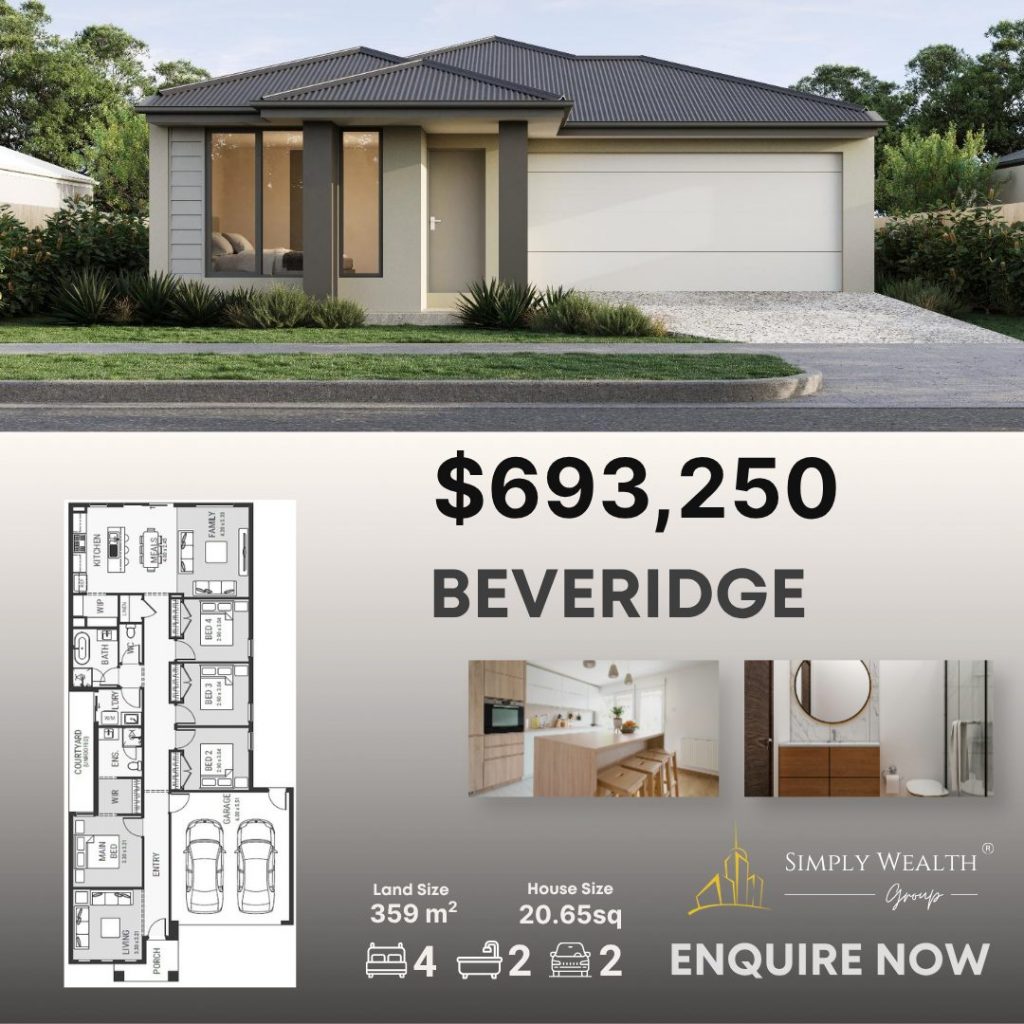
Explore this modern 4-bedroom house and land package in Beveridge. Featuring a full turnkey finish, quality inclusions, family-friendly design, and excellent long-term investment potential, this home is ideal for first home buyers, families, and investors seeking value in Melbourne’s growing northern suburbs.
House and Land Package Beveridge | Full Turnkey Home From $657,100
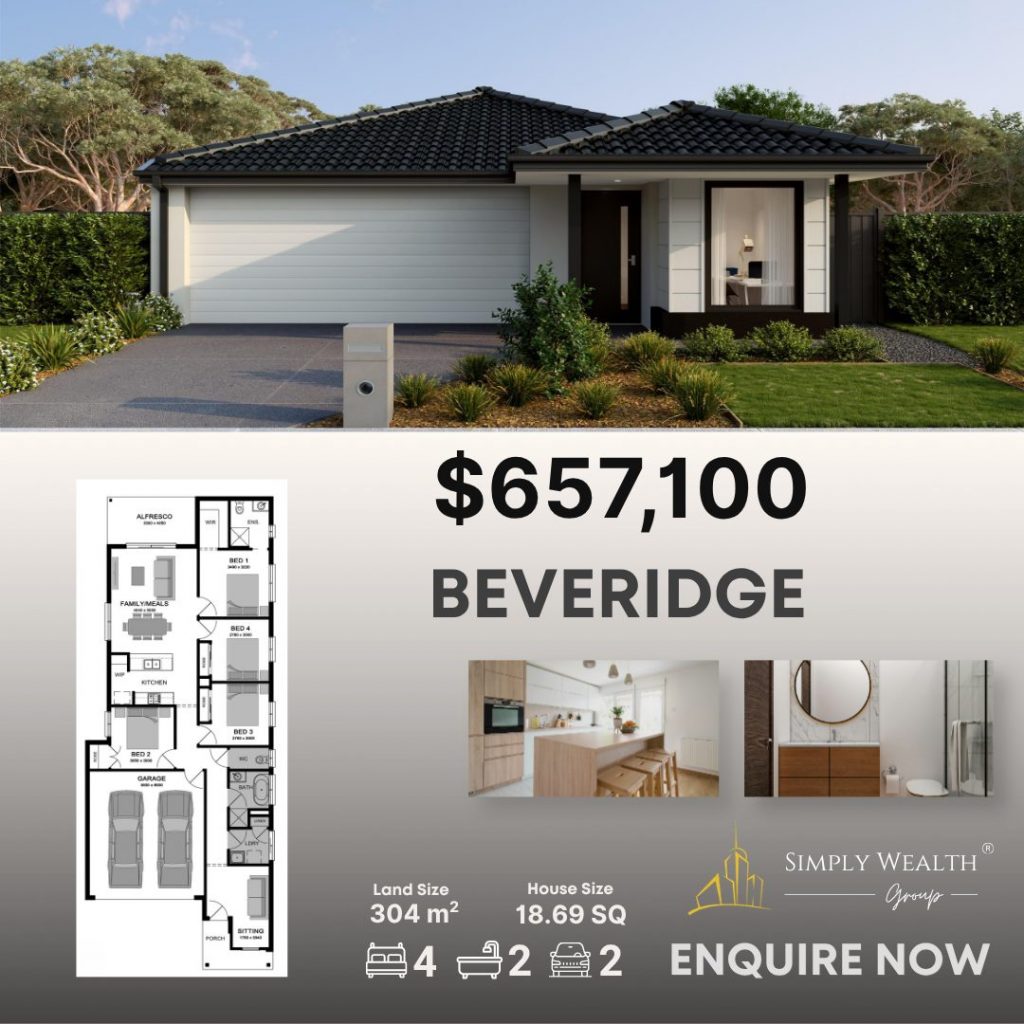
Explore this full turnkey house and land package in Beveridge featuring 4 bedrooms, 2 bathrooms, double garage and premium inclusions from $657,100.
House and Land Package Rockbank | Full Turnkey 4 Bedroom Home from $750,350
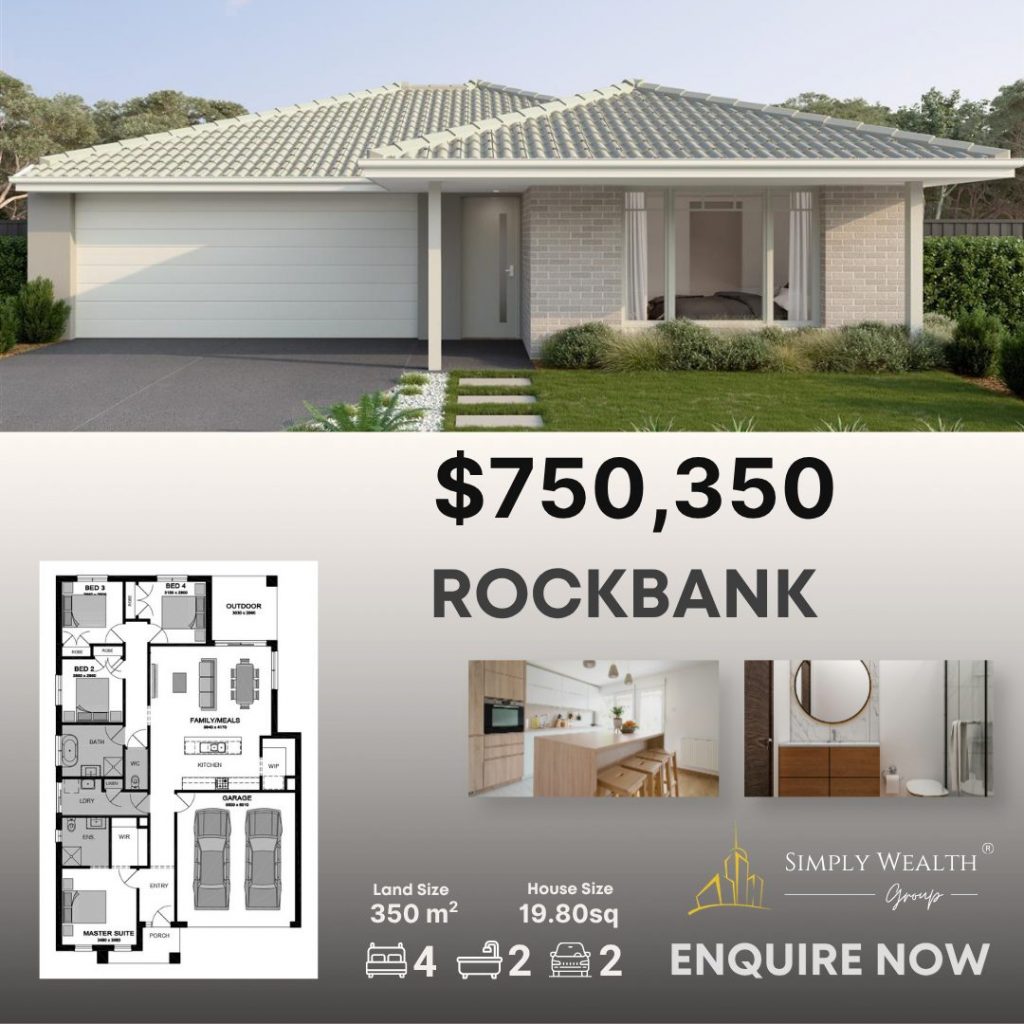
Discover this full turnkey house and land package in Rockbank featuring 4 bedrooms, 2 bathrooms, double garage and premium inclusions. Learn more today about House and Land Package Rockbank
Townhome in Truganina | Full Turnkey Home from $569,900
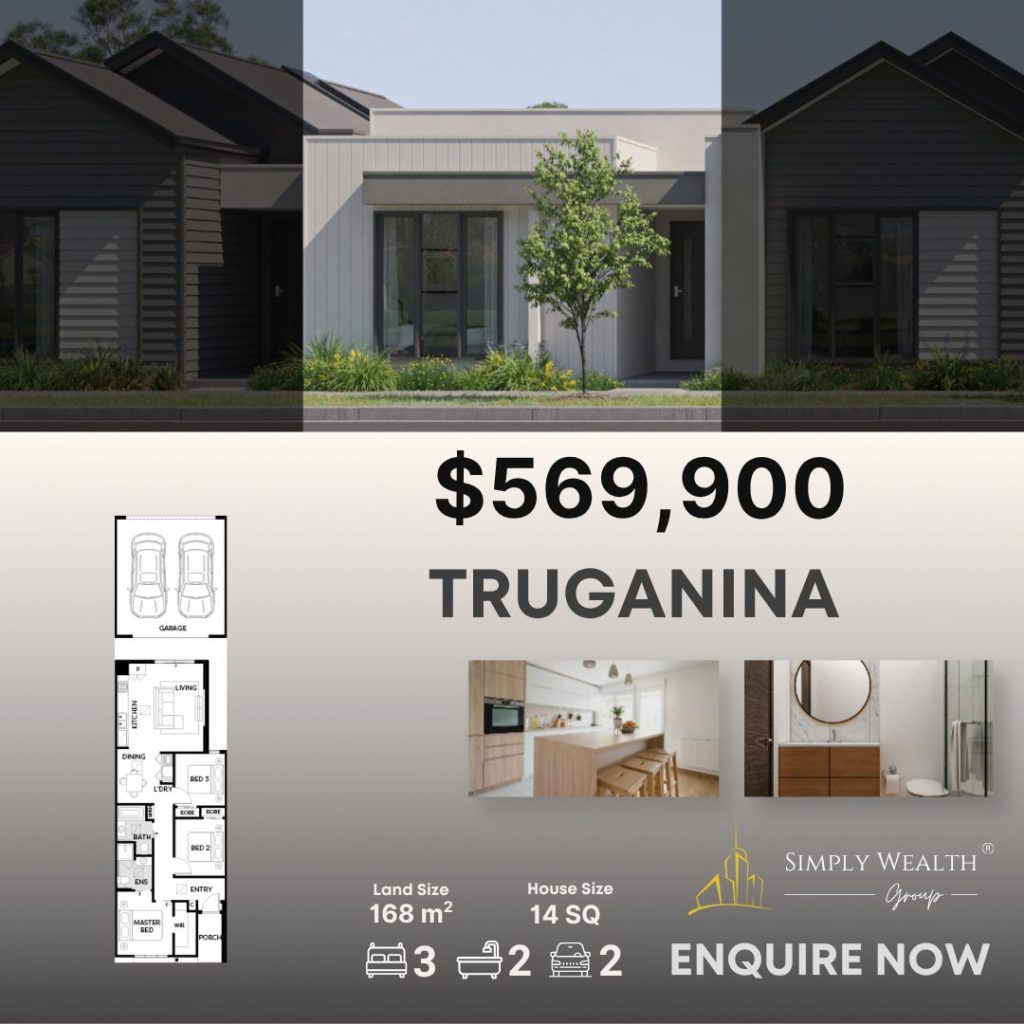
Townhome in Truganina. Discover a modern townhome in Truganina featuring a full turnkey 3-bedroom home with premium inclusions, low-maintenance living, and strong investment potential.